
AC Running But the House Won't Cool
This complaint is a balance problem: heat removed versus heat gained. Understanding which side of that equation is losing tells you whether you need a repair, a duct fix, or changes to the house itself.
Participating provider availability varies by location, demand and technician capacity.
The balance that decides comfort
Indoor temperature is the running score between two rates: how fast heat enters your home and how fast the cooling system removes it. When the system runs continuously and the temperature holds or climbs, those rates are equal or the wrong way around. That can happen because removal dropped, because gain rose, or because cooling is being delivered somewhere other than the rooms you occupy.
Airflow at the equipment
Start here, because airflow is the part a homeowner can most easily influence. A loaded filter, a dirty blower wheel, a fouled evaporator coil, closed registers or crushed flex duct all reduce the volume of air crossing the coil. Less air means less heat carried away per minute, and it can drive the coil cold enough to condense heavily or freeze — at which point delivery collapses entirely.
Duct losses in a hot attic
This is the underrated culprit in many Yuma homes. Supply ducts routed through attic space can sit in air far hotter than outdoors on a summer afternoon. Every leaky joint, disconnected boot, compressed run and thin spot in the insulation loses cooling that you paid to produce. The classic symptom is a house that cools acceptably in the morning and falls apart in the afternoon, with the rooms farthest from the equipment suffering most.
Return-side leakage is just as damaging: a return duct drawing hot attic air adds load and delivers dust straight to the filter and coil.
Heat gain from the house
- West- and south-facing glass without shading during peak sun
- Thin, displaced or missing attic insulation
- Dark roofing and unshaded exterior walls
- Air leakage around doors, windows, attic hatches and can lights
- Ovens, dryers, and multiple appliances running during peak hours
- Converted garages or additions never accounted for in the original design
Capacity and sizing
Equipment loses effective capacity as outdoor temperature rises, so a system that satisfies easily in May can be at its limit in July. If everything measures healthy — clean coils, correct charge, good airflow, sound ducts — the honest answer may be that the equipment is undersized for the home's real load, or that the envelope needs improvement before more capacity makes sense.
Homeowner Check
- Replace a loaded filter and note the date
- Open every register; clear furniture and rugs off returns
- Measure return versus supply air temperature with a simple thermometer
- Compare room by room, noting which rooms fail and when
- Close blinds on sun-facing glass through the afternoon
- Skip the oven and dryer during peak hours; run ceiling fans
- Note whether the home recovers overnight
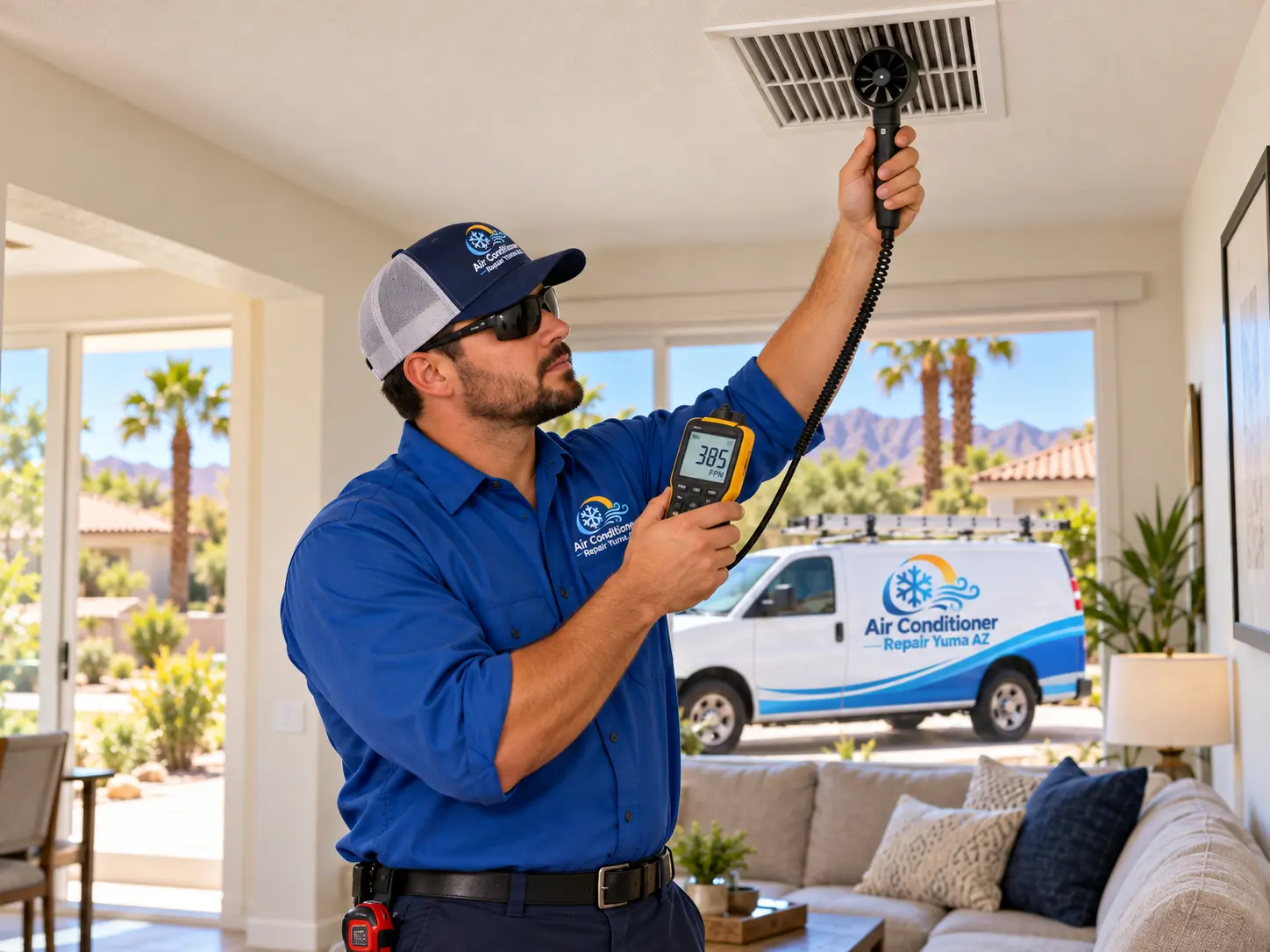
Technician Check
Narrowing it down
Whole-house failure with weak airflow suggests equipment or filtration. Whole-house failure with good airflow suggests refrigerant, capacity or heat gain. Room-specific failure suggests ducts, registers or that room's own solar load. Failure only after mid-afternoon suggests attic duct losses and heat gain. Bring those observations to your request; they are worth more than any single number.
Comfort FAQs
Questions about a home that will not cool
Why does my AC run all day without cooling the house?
Why are some rooms much warmer than others?
Can leaky ducts really make that much difference?
How can I tell whether the equipment or the house is the problem?
Would a bigger system fix it?
What quick wins exist while I arrange service?
24/7 Emergency AC Help Requests
Request an evaluation of your cooling performance
Call to ask about current availability, or send your request and a participating independent provider may follow up.
Participating provider availability varies by location, demand and technician capacity.