AC Leaking Water Yuma AZ
Air conditioners produce water by design. Problems start when that water cannot leave the way it was intended to — and in a dust-heavy climate, blocked drains are one of the most common service calls of the season.
Participating provider availability varies by location, demand and technician capacity.
Where the water comes from
As warm indoor air passes over the cold evaporator coil, moisture condenses on the fins, drips into a pan beneath the coil, and drains away through a condensate line — sometimes by gravity, sometimes with a small pump. Even in a dry desert climate a system produces meaningful condensate during long run cycles, and much more during humid monsoon weather.
Common causes of an indoor leak
- Clogged condensate drain line, usually sludge from dust and biological growth
- Drain pan full, rusted through or cracked
- Condensate pump failure or a pump discharge line problem
- Drain line disconnected, improperly sloped or poorly routed
- Frozen evaporator coil that thawed and overwhelmed the pan
- Dirty coil throwing condensate past the pan edge
- Blocked secondary drain on an attic or closet unit
- Duct or plenum condensation during high humidity
Why Yuma drains clog
Fine airborne dust does not stay in the air. Some of it makes it past the filter, settles on a wet coil and washes into the pan, where it mixes with condensate and organic growth into a paste. That paste narrows the drain until a heavy run day tips it into a full blockage. Systems installed in attics and hot garages are especially unforgiving because a slow leak can run for days without being seen from a living space.
Monsoon season adds humidity to that picture. Condensate volume rises exactly when a partially restricted drain is least able to handle it, which is why many leaks appear in July and August.
Homeowner Check
- Turn the system off at the thermostat to stop producing more condensate
- Place towels or a shallow pan to contain water and protect flooring
- Move belongings away from the wet area
- Replace a loaded air filter, since restricted airflow contributes to freezing and overflow
- Look for a visible outdoor drain stub that should be dripping during operation
- Photograph the water location — it helps the provider understand the path
Technician Check
Emergency Warning
What a provider typically inspects
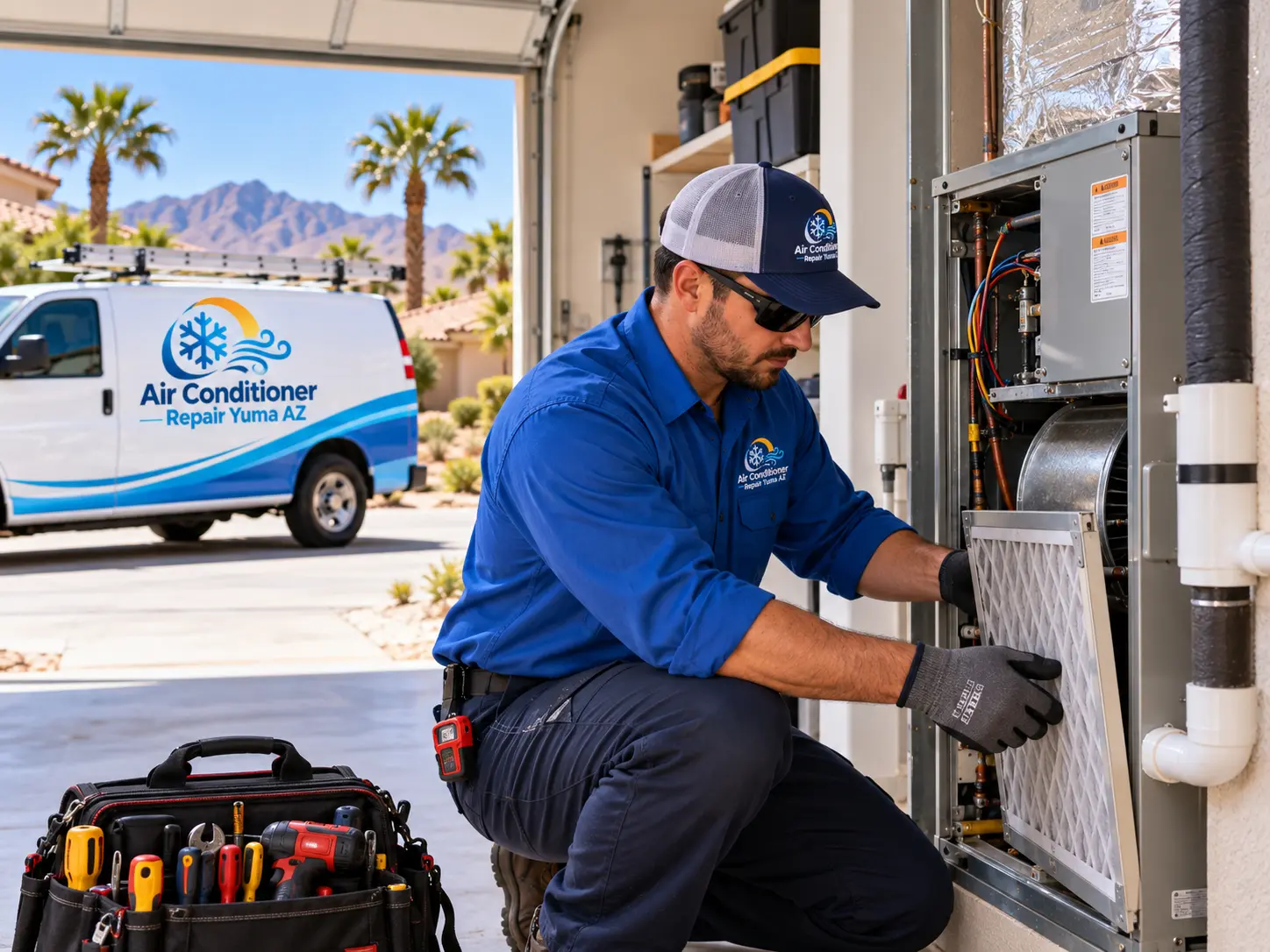
Expect them to trace the entire condensate path: pan condition, drain connection, line routing and slope, trap and vent details, secondary drain, pump operation, and the float switch that should have interrupted operation. They should also determine whether the leak is purely drainage or a symptom of a frozen coil, which turns the visit into an airflow and refrigerant diagnosis as well.
Reducing the odds next season
Consistent filter changes, seasonal maintenance that includes drain service, and keeping an eye on the drain stub during hot months are the practical defenses. For attic units, ask whether the secondary drain and float switch are in place and functioning — that is the difference between a nuisance and a ceiling repair.
Water Leak FAQs
Questions about AC water leaks in Yuma homes
Why is my air conditioner leaking water indoors?
Is a small amount of water a real problem?
Why did my system shut itself off when it leaked?
Can dust cause a clogged drain?
Can I pour bleach down the drain line?
Why is water dripping from a ceiling vent?
24/7 Emergency AC Help Requests
Request help with an AC water leak
Call to ask about current availability, or send your request and a participating independent provider may follow up.
Participating provider availability varies by location, demand and technician capacity.